Masterbatches for Nonwoven Fabrics
Colour and additive masterbatches for PP spunbond and meltblown nonwoven fabric, for medical, hygiene and agricultural use.
What masterbatches does nonwoven fabric need?
Nonwoven fabric takes colour, and usually one or more functional additives: a softener for a cotton-soft feel, hydrophilic for absorbent layers, UV for agricultural covers, and flame retardant, antimicrobial or antistatic grades where the end use needs them. They are added to the PP on the spunbond or meltblown line.
The filaments are very fine, so dispersion matters most: poorly dispersed pigment builds up at the spinneret and drops onto the web as shots and drips.
- Polymer
- PP spunbond and meltblown
- Colours
- White, blue, green, beige, brown, ivory, red, orange, yellow, black, or matched to your sample
- Colour dosage
- Usually 1% to 4%
- Additives
- Softener, hydrophilic, hydrophobic, UV, flame retardant, antimicrobial, antistatic, brightener, processing aid
- Minimum order
- None for standard shades; 50 kg for custom
What we make for nonwoven fabric
Colour and additives for spunbond and meltblown lines.
Colour masterbatch
Standard nonwoven colours, or any shade matched to your sample.
White masterbatch
Bright, opaque whites for hygiene and medical fabric.
Softener, hydrophilic and hydrophobic
A cotton-soft feel, absorbent layers, or water-repellent ones.
UV masterbatch
Protects crop covers and outdoor fabric from sunlight.
Flame retardant
Halogenated and halogen-free grades for fabric that must resist fire.
Antimicrobial, antistatic and brightener
For medical and hygiene fabric, clean handling and a brighter white.
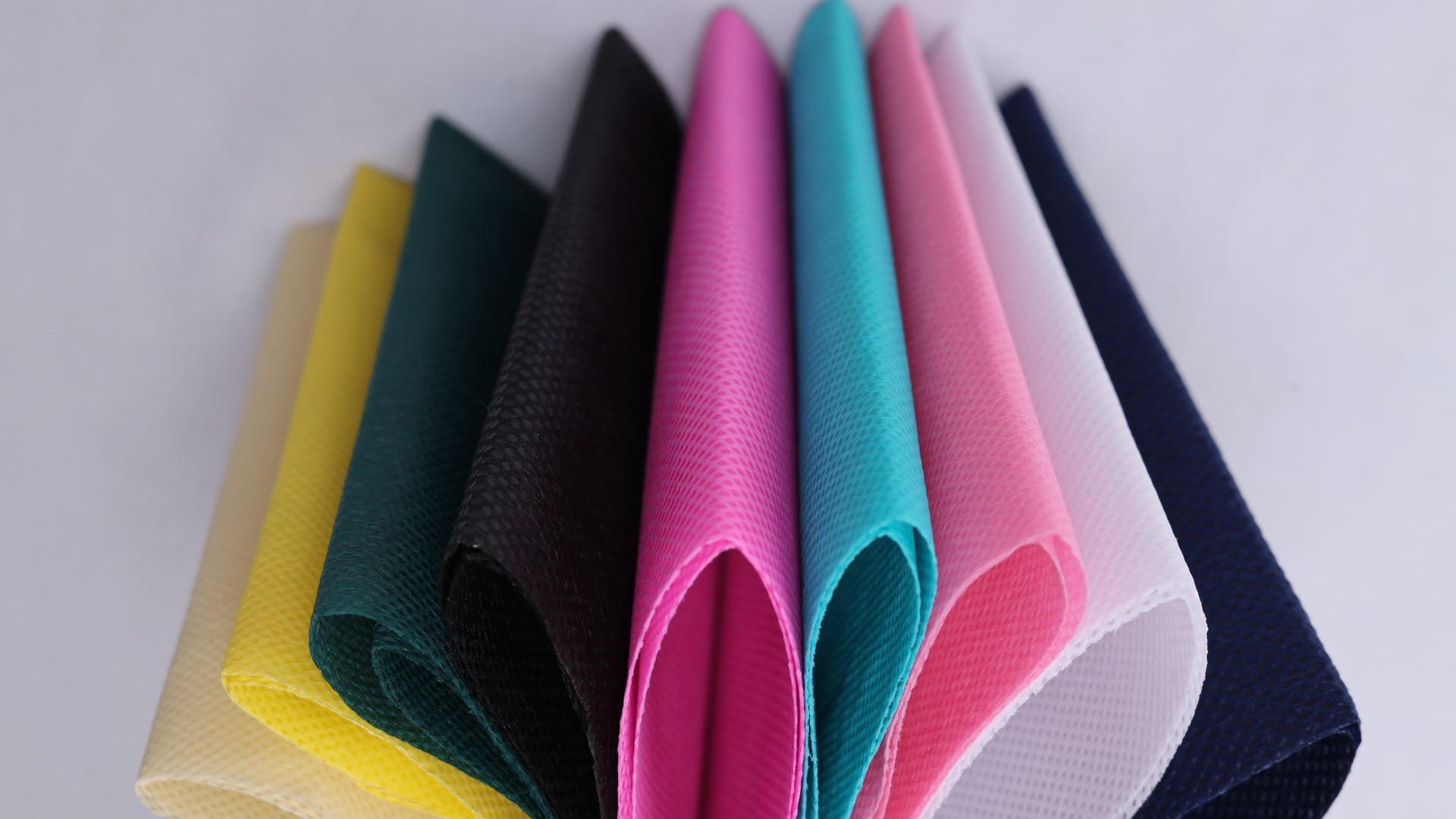
Nonwoven colours
Our standard nonwoven colours, shown as fabric. Pick a shade, then request a sample.
Don't see your shade? Send us a sample or a Pantone / RAL code and our lab will match it. Ask for a colour match
Common nonwoven problems, and the fix
Drips and shots on the web
Highly dispersed pigments keep the spinneret clean, so there are no drops, web breaks or stops for die cleaning.
Deep shades cost too much
High pigment loading gives deep, even shades at a lower dosage, so you use less masterbatch per kg of fabric.
The fabric feels harsh
Softener masterbatch gives a cotton-soft feel for hygiene and medical products.
Water won't soak in
Hydrophilic masterbatch makes the fabric absorb water, for top sheets and wipes.
Frequently asked questions
What masterbatch is used for nonwoven fabric?
Colour masterbatch for the shade, plus additive masterbatches for the end use: softener, hydrophilic or hydrophobic, UV, flame retardant, antimicrobial or antistatic. They are added to the PP on the spunbond or meltblown line.
What dosage of colour masterbatch is used for nonwoven fabric?
Usually 1% to 4%, depending on the shade and the fabric weight. Tell us your colour, GSM and line, and we'll recommend a grade and dosage.
Do you make softener and hydrophilic masterbatch for nonwovens?
Yes. We make softener masterbatch for a cotton-soft feel and hydrophilic masterbatch for absorbent fabric, as well as hydrophobic grades.
Do you make UV and flame retardant masterbatch for nonwovens?
Yes. UV masterbatch for crop covers and outdoor fabric, and flame retardant masterbatch, halogenated and halogen-free.
Can you match my current nonwoven colour?
Yes. Send us a sample of your product or masterbatch, or a Pantone or RAL code, and we'll match it on your polymer. Trial samples are usually ready in 2 days.
What is the minimum order?
There is no minimum order for standard shades. Custom, colour-matched shades start at 50 kg.