
Injection-moulded parts
Polymers: ABS, PP, Nylon (PA6, PA66) and more
Supplied as: Masterbatch
UL 94 V-0 / V-1 / V-2Glow wire
Ask for grades & TDS
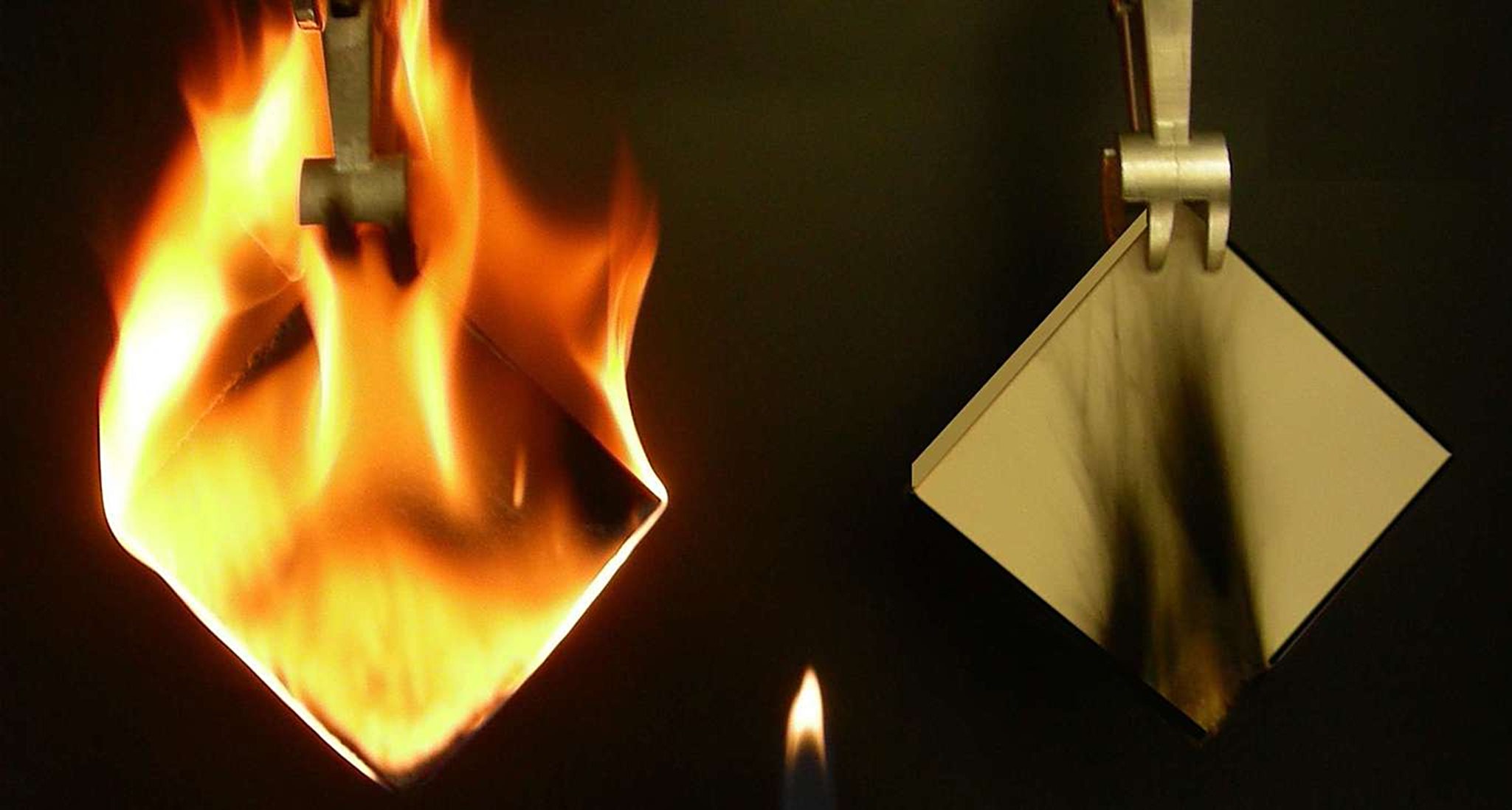
Halogenated and halogen-free flame retardants for film, filaments, shade nets, ABS, PP and Nylon parts, cables and EPDM. UL 94 V-0 in almost every product.
Flame retardant (FR) masterbatch is a concentrate of flame retardant additives in a carrier resin, made into granules. You mix it into your polymer during moulding or extrusion, and the finished product resists catching fire, slows the spread of flame and, at the right dosage, puts itself out when the flame is taken away.
Most plastics burn easily, so electrical parts, cables, building and public-space products often have to pass a fire test before they can be sold. The test decides the grade: UL 94 and glow wire for moulded parts, VTM, DIN 4102 B1 or NFPA 701 for film, sheet and nets, and IEC 60332 for cables.
From thick moulded parts to thin film and cable.
UL 94 V-0 is the toughest everyday rating for plastic parts: after the test flame is taken away, the part must stop burning within 10 seconds, with no burning drips. We reach V-0 in almost every product we make flame retardants for, from ABS and Nylon housings to PP parts.
Thin products are the hardest to protect, because there is so little material to hold the flame retardant. We make FR grades for blown film, tarpaulin, filaments and shade nets, so the flame doesn't spread across the sheet or up the net.
Ready-to-use FR cable compounds, halogenated or halogen-free, so a flame doesn't travel along the cable. We also make flame retardants for EPDM and other rubber products.
Each grade is made for the product, polymer and test it has to pass.
Polymers: ABS, PP, Nylon (PA6, PA66) and more
Supplied as: Masterbatch
Polymers: PE, PP
Supplied as: Masterbatch
Polymers: HDPE, PP
Supplied as: Masterbatch
Polymers: Made for your cable
Supplied as: Ready-to-use compound, halogenated or halogen-free
Polymers: EPDM and other rubbers
Supplied as: Masterbatch
Tell us your polymer, the thickness and the test it must pass, and we'll make a grade for it.
Talk to usWe make both. The right one depends on your product, your test and where it will be sold.
We run UL 94, glow wire and oxygen index tests in-house, so we can check a grade on your polymer and thickness before it reaches your line.
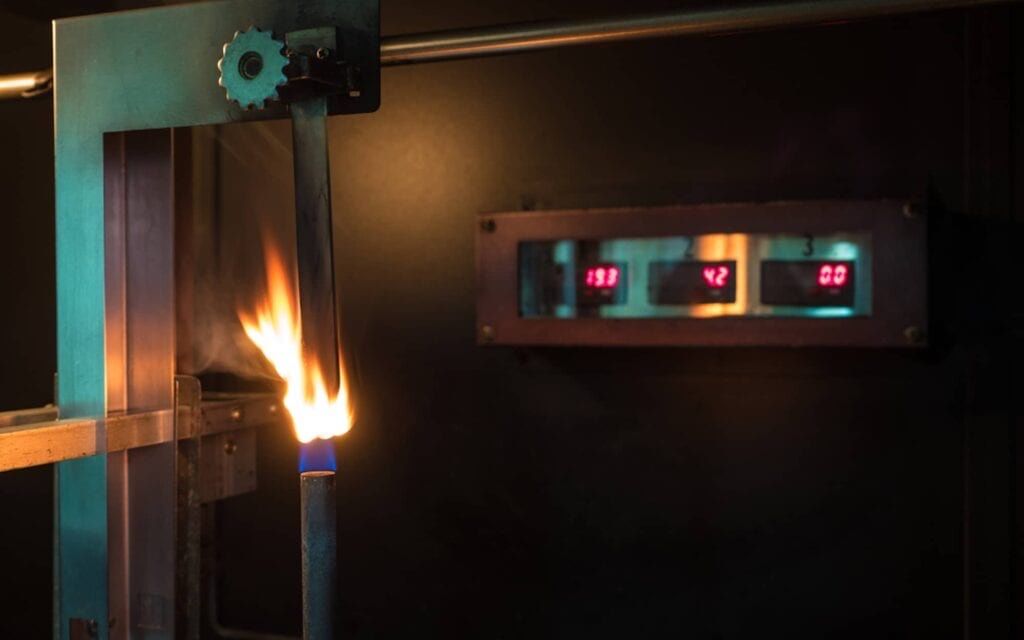
Vertical and horizontal burning tests on bars and plaques: V-0, V-1, V-2 and HB.
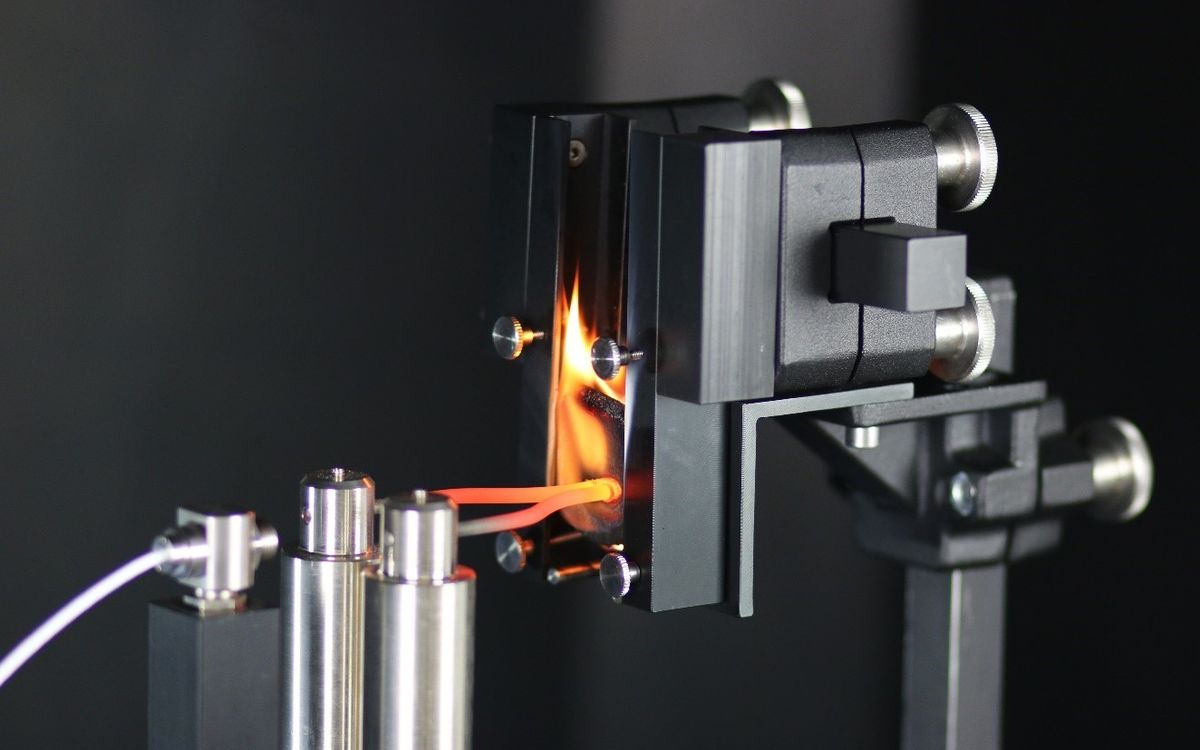
IEC 60695-2 tests up to 960 °C, GWFI and GWIT, for electrical and appliance parts.
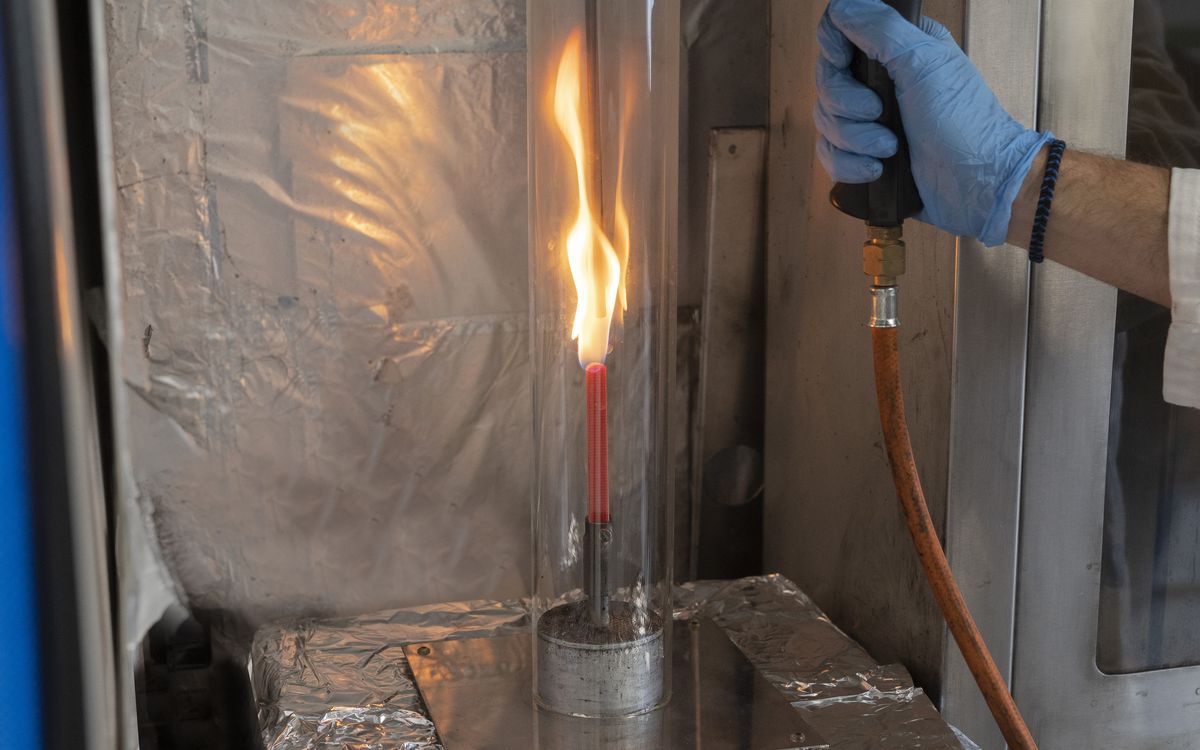
ISO 4589 and ASTM D2863: the lowest oxygen level at which the plastic keeps burning.
UL 94 is the most used flammability test for plastic parts. A flame is held to a bar, vertical or horizontal, and the rating depends on how fast it goes out and whether it drips while burning. A rating always comes with a thickness: V-0 at 1.6 mm is harder to reach than V-0 at 3 mm. Thin film and sheet use the matching VTM-0, VTM-1 and VTM-2 ratings.
The glow wire test (IEC 60695-2) copies an overheated part inside a device. A loop of wire is heated to a set temperature and pressed into the plastic for 30 seconds, with tissue paper underneath to catch burning drips.
The limiting oxygen index, LOI (ISO 4589, ASTM D2863) is the lowest share of oxygen in the air around a sample that keeps it burning. Air is 21% oxygen, so a plastic with an LOI well above 21% tends to put itself out. Flame retardants raise it.
Typical values for plain polymers, without flame retardant.
Film, tarpaulin, tents and nets are tested as hanging sheets, because they burn differently from solid parts.
Cables are tested for how far a flame travels along them, and halogen-free cables also for the smoke and gases they give off.
Car interior materials are tested by burning a horizontal strip.
Flame retardant (FR) masterbatch is a concentrate of flame retardant additives in a carrier resin, made into granules. You mix it into your polymer during moulding or extrusion so the finished product resists catching fire, slows the spread of flame and, at the right dosage, puts itself out when the flame is removed.
UL 94 is the most widely used flammability test for plastics. In the vertical test a flame is held to the bottom of a bar twice for 10 seconds. V-0 means the bar stops burning within 10 seconds each time and drops no burning drips. V-1 allows 30 seconds, and V-2 also allows burning drips. A rating always comes with a thickness, and thinner parts are harder to pass.
The glow wire test (IEC 60695-2) presses a loop of wire, heated to a set temperature between 550 and 960 °C, into the plastic for 30 seconds. It shows how a part behaves when a component overheats. GWFI is the highest temperature at which the plastic goes out within 30 seconds and doesn't set the tissue paper below alight; GWIT is the temperature at which it doesn't catch fire at all. Appliance and electrical parts often need GWFI 850 °C or 960 °C.
In almost all products, yes. Tell us your polymer, the thickness of your part and the test it must pass, and we'll recommend a grade and send a sample for a trial on your own line.
Yes. We have a UL 94 test chamber, a glow wire tester and an oxygen index (LOI) tester in our own lab, so we can check a grade on your polymer and thickness before it reaches your line.
Halogenated flame retardants stop the burning chemistry in the flame and work at lower dosages. Halogen-free flame retardants cool the plastic and form a protective char; they need a higher dosage but give off less smoke and no halogen gases. We make both, and recommend one based on your product, your test and where it will be sold.
Film and tarpaulin, filaments and shade nets, injection-moulded parts in ABS, PP and Nylon, wire and cable, and EPDM and other rubber products. Tell us your polymer if it isn't listed.
Yes. We make ready-to-use flame retardant cable compounds in both halogenated and halogen-free versions.
It depends on the polymer, the thickness of the product and the rating it must reach. FR masterbatch is added at a much higher dosage than colour masterbatch, because the flame retardant has to make up a real share of the product. We recommend the dosage with the grade, for your product.
Any additive used at a high dosage can change strength, flow and surface finish. That's why we choose the chemistry and dosage for your product, and you confirm it with a trial on your own line before you run it.
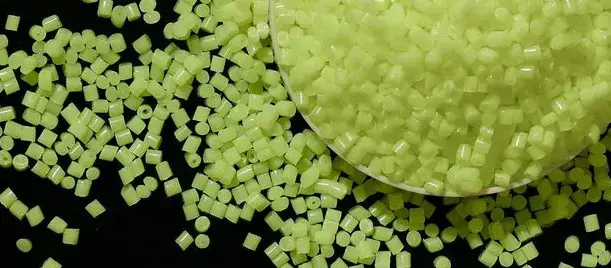
UV, antistatic, optical brightener, anti-yellow and 25+ more.
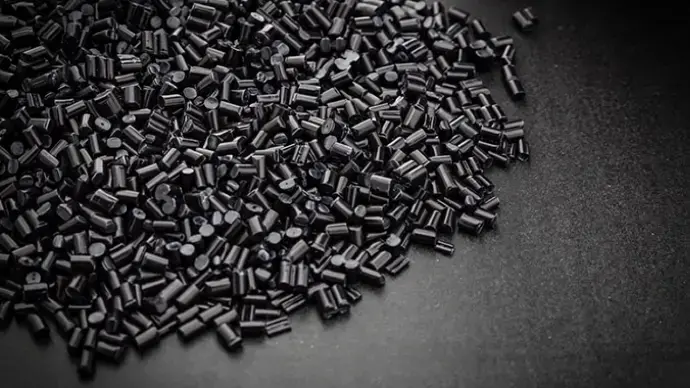
Deep carbon black for PE, PP, PET, Nylon, PC, ABS and more, with UV-stable grades.
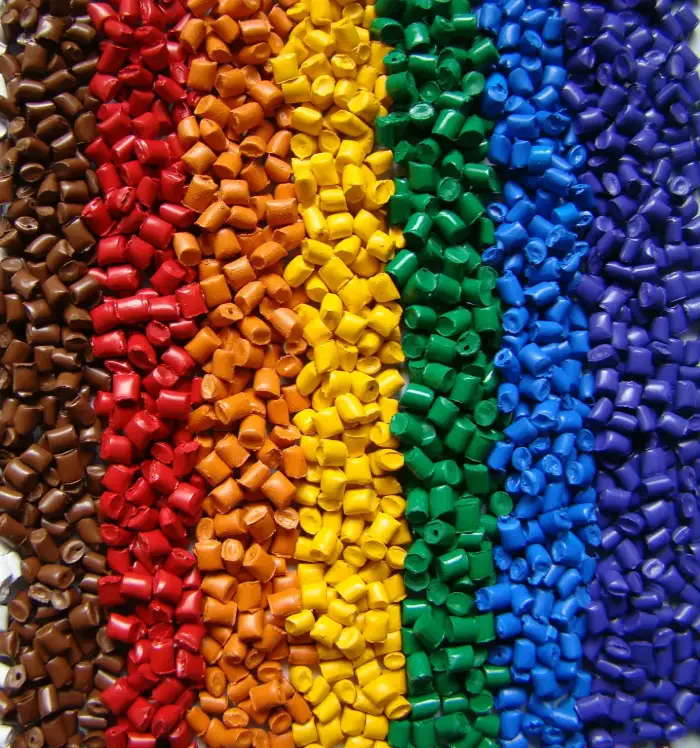
Any shade matched to your sample or Pantone / RAL code, for PE, PP, PET, Nylon and 10 more polymers.